
Basys: early Web 2.0 accounting software
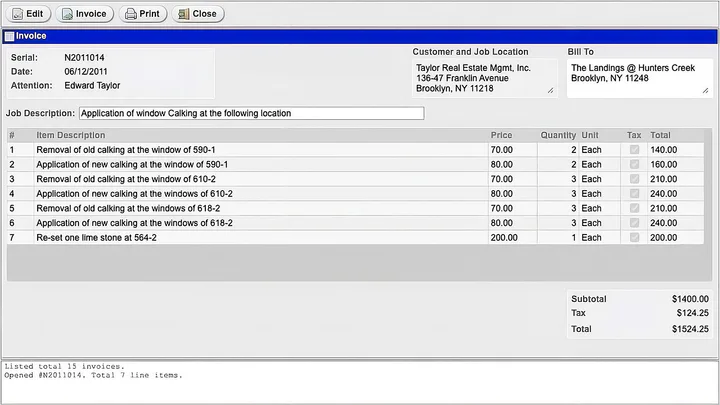
While pursuing my undergrad in 2011, I built Basys, a full-featured online accounting system with proposals, invoices, cash-flow tracking, and reporting. It delivered a smooth cross-browser AJAX experience years before QuickBooks Online became mainstream.
Story
In 2011, while completing my undergraduate degree, I worked part-time as a software developer and took on a project for a construction company in Queens, New York. They needed a web-based tool to create proposals, send invoices, track payments, and generate financial reports. No major software vendor offered this fully online yet.
I designed and built Basys (Basic Accounting System) from scratch. The interface felt like a desktop application, with smooth AJAX interactions across Internet Explorer, Firefox, Chrome, and Safari. Users could draft estimates, issue invoices, log payments, monitor cash flow in real time, and pull customizable financial reports from any browser.
The client went live and used Basys daily. I later extended the codebase into a multi-tenant foundation to support additional customers. Full commercialization paused as I shifted back to academics and robotics, but Basys gave me something valuable early on: the experience of owning a product completely, from database schema to client training, and delivering it to a paying customer on a deadline.
O believers! When you contract a debt for a fixed term, put it in writing.
Impacts
- Deployed as the primary accounting system for a live construction business in Queens, NY, before QuickBooks Online existed
- Delivered a full proposal-to-report workflow across IE, Firefox, Chrome, and Safari using hand-crafted AJAX
- Expanded into a multi-tenant SaaS architecture ready for additional clients
Challenges & Solutions
Challenges
- Building a rich, responsive UI in 2011 without any modern frontend framework
- Inconsistent behavior across IE, Firefox, Chrome, and Safari with no shared baseline
- Storing and transmitting financial data securely before cloud security best practices were established
Solutions
- Hand-crafted AJAX using raw XMLHttpRequest with progressive enhancement and per-browser fallbacks
- Used feature detection throughout and validated every interaction against all four browsers
- Enforced server-side validation and encrypted storage, keeping all sensitive logic off the client