
Design system rollout for College Board
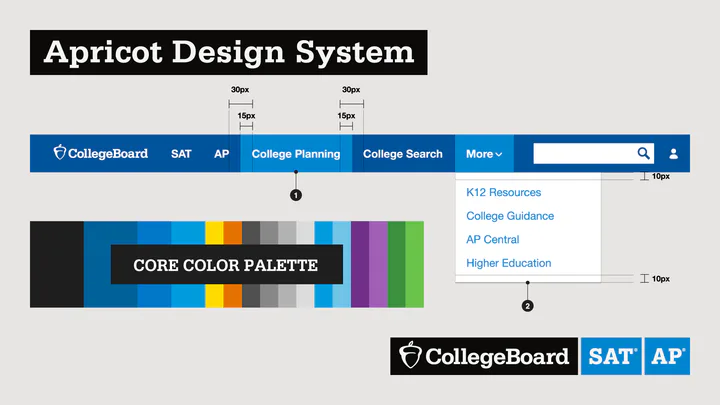
At College Board, I served as the cross-functional bridge between New York UX and Virginia engineering for the Apricot design system. I turned UX research into prototypes for SAT practice, AP Home, and score reporting, then converted validated patterns into Apricot components, responsive specs, and usage guidelines. The products are used by millions of students and educators across the United States.
Story
When I joined in 2015, the SAT ecosystem redesign already had several products moving in parallel: student practice, score reporting, educator reporting, and enterprise administration workflows. While design leadership and research were based in NYC and most implementation engineering was in Reston, the teams needed a faster way to validate UX decisions before they became expensive handoff changes.
I operated as the bridge by building rapid prototypes directly with the design team, then translating validated decisions into implementation-ready specs. This workflow helped separate idea exploration from production risk and gave both teams a shared reference for behavior, hierarchy, and responsive interaction.
In parallel, I contributed to Apricot, College Board's internal design system built on top of Bootstrap 4 with broader component coverage and stricter standards. Working with internal UX partners and Butler Brothers, I helped turn repeated design choices into reusable patterns so teams could move faster without fragmenting the experience.
Impacts
- Established a pre-handoff prototype workflow that surfaced feasibility issues early and reduced implementation churn across concurrent product tracks.
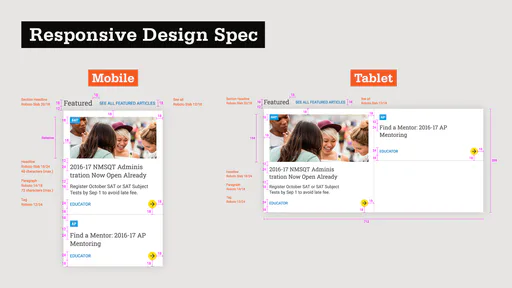
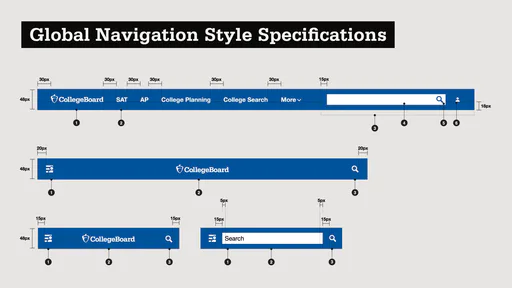
- Authored reusable component and navigation specs that standardized responsive behavior, spacing, typography, and interaction rules in the Apricot design system.
- Improved collaboration between NYC UX, Reston engineering, and external design-system partners by supplying executable references and clear implementation specs.
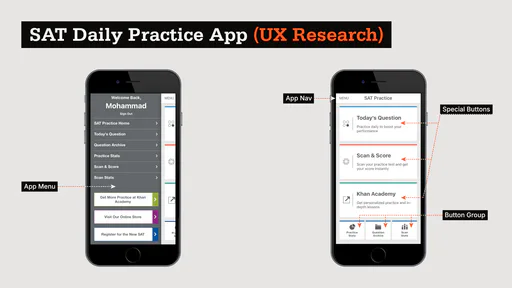
- Supported mobile-first experiences across Daily Practice, AP Home, and reporting flows inside a national-scale education platform.
Challenges & Solutions
Challenges
- Design and engineering teams were split across offices, which made handoffs slow and created interpretation gaps.
- During 2015-2016, multiple SAT redesign initiatives were evolving at once, causing repeated UI decisions and cross-product inconsistency.
- Ambitious UX ideas needed to be validated against real technical constraints, accessibility requirements, and launch timelines.
Solutions
- Built lightweight interactive prototypes for critical flows and paired them with explicit implementation notes before each handoff.
- Moved repeated patterns into Apricot components, documented behavior states, and reused the same standards across teams.
- Tested concepts early in code, pressure-tested edge cases with designers, and escalated only implementation-ready decisions to the primary development team.