
Long-range long-life smart sensor platform
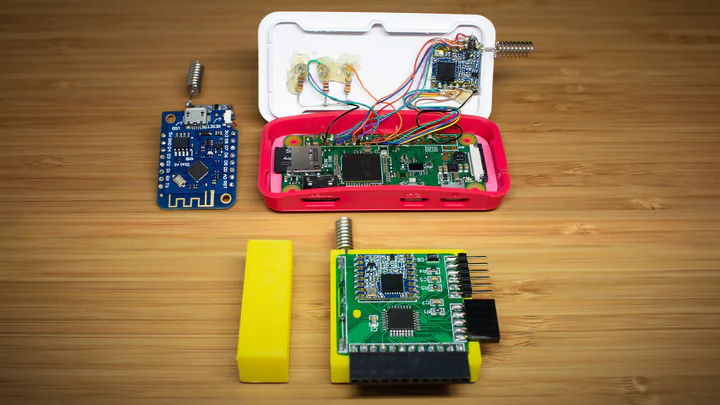
Built a low-power smart home sensor platform by iterating from early Wi-Fi and 2.4 GHz experiments to a long-range LoRa architecture. Shipped working door/window and soil-moisture prototypes using a custom low-power sensor node, a production-ready hub path, and MQTT/Home Assistant integration. Designed production-intent PCB revisions and iterated low-profile enclosure prototypes toward a consumer-ready form factor.
Story
This project became a multi-year progression from low-cost microcontroller experiments to a production-intent smart home sensor platform. I started with inexpensive Wi-Fi boards, moved through 2.4 GHz gateway experiments, then settled on a LoRa architecture that gave me the best range-to-power tradeoff for battery devices. The progression was practical and staged: early low-power LoRa exploration in 2020, DevKit validation in 2022, then application PCB builds in 2023.
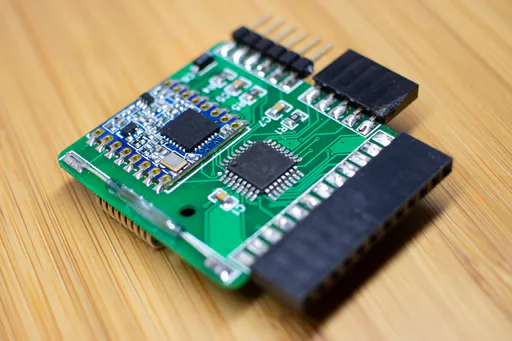
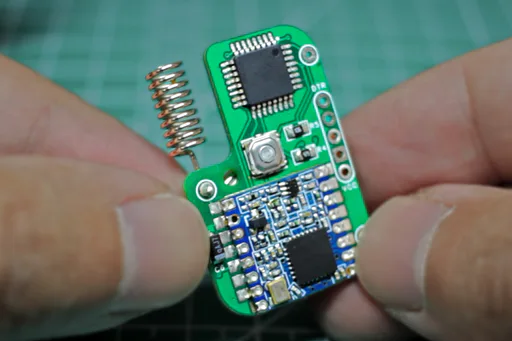
The final node design centered on a custom low-power MCU + LoRa radio stack. For door and window monitoring, I used a reed-switch interrupt path so the node wakes only on state transitions, sends a compact packet, and immediately returns to deep sleep. A custom bootloader and power profile tuning reduced sleep current to about 1 uA. Across my PCB prototypes, I used CR2450 and CR2032 coin cells, targeting multi-year runtime under moderate use while still reporting battery telemetry for maintenance planning.
On the receiving side, I prototyped with multiple hub approaches, from simple microcontroller receivers to Linux-based single-board systems, and then implemented a complete dedicated hub path for payload handling and automation integration. The hub decoded node payloads and published MQTT topics, including Home Assistant discovery and availability/state messages, so sensors appeared as first-class entities instead of raw serial logs. In neighborhood tests, the link remained reliable at over 1000 ft with clear line-of-sight and around 500 ft with large obstacles; denser concrete-heavy scenarios still required additional characterization.
After validating the door/window path, I extended the platform to soil sensing. I first ran resistive experiments with multiple electrode materials and coatings, then transitioned to a capacitive approach to improve long-term stability. On the capacitive path, I iterated from simple straight electrodes to a higher-surface-area interdigitated zigzag PCB trace pattern, which improved sensitivity and repeatability. Firmware-side sample averaging and offset calibration then mapped readings into dry/moist/wet bands while staying compatible with the same LoRa transport pipeline.
To move beyond lab wiring, I designed custom PCB iterations and ordered fabrication runs, then created enclosure revisions with in-house 3D printing to achieve a slim, install-friendly product profile. That hardware loop (firmware + PCB + enclosure) turned the project from a radio demo into a consumer-ready smart home sensor product foundation.
Impacts
- Verified neighborhood-scale range in real tests, with stable communication beyond 1000 ft in clear line-of-sight and around 500 ft through major obstructions such as houses and concrete walls.
- Delivered an event-driven door/window node with a custom ultra-low-power boot path, reaching approximately 1 uA deep-sleep current and supporting multi-year coin-cell operation under moderate activity.
- Extended the same low-power platform to a soil-moisture node by evaluating resistive electrodes across multiple conductive materials, then moving to a capacitive PCB probe with tuned sampling and moisture classification.
- Built a complete edge-to-dashboard path: LoRa sensor node -> IoT hub receiver -> MQTT topics -> Home Assistant auto-discovery.
- Converted bench prototypes into production-intent hardware by designing custom PCB iterations and low-profile enclosure revisions for clean installation and daily use.
Challenges & Solutions
Challenges
- ESP8266-based Wi-Fi nodes were too power-hungry for long-life battery sensors because radio association dominated active-time energy use.
- Reliable low-power sensing required handling two very different signals: binary reed-switch events and analog moisture behavior.
- Receiving LoRa payloads was not enough for practical home automation unless they were normalized into Home Assistant entities.
- Breadboard proof-of-concept hardware was difficult to mount and protect in real deployment conditions.
Solutions
- Switched to a custom low-power MCU and sub-GHz LoRa architecture with deep-sleep wake-on-event behavior, keeping radio usage short and deterministic.
- Implemented a compact payload format for door/window state plus battery telemetry, then developed a separate capacitive sensing path with sample averaging and offsets for soil classification.
- Built a dedicated hub path that decoded payload structs, published MQTT discovery/state topics, and exposed online/offline plus battery attributes in Home Assistant.
- Designed custom PCBs and iterated enclosure geometry with in-house 3D printing until the sensor form factor was installation-ready.