
SellerCrew: Amazon seller operations suite
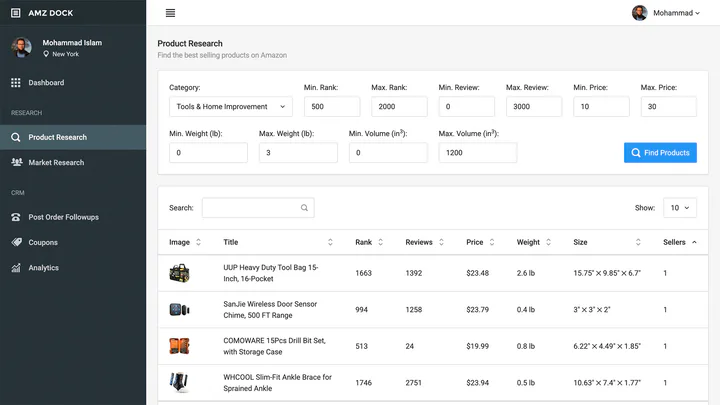
SellerCrew evolved from AMZDock (2016-2020) into an Amazon seller operations SaaS covering follow-ups, coupons, analytics, and reporting. Year-end reconciliation of sales, refunds, and expenses dropped from months of manual spreadsheet labor to under a minute.
Story
SellerCrew developed across 2016, 2017, and 2020. The earliest phase started as AMZDock CRM, focused on one practical need: run Amazon post-purchase operations from one place. The first operating version centered on follow-up calls, coupon handling, and lightweight outreach analytics so remote assistants could work from a clear priority queue instead of fragmented tools.
From 2017 onward, the product moved through an AMZDock 5.3 transition phase. The architecture shifted from a legacy AngularJS plus separate PHP service model toward a stronger SaaS foundation with Laravel-centered services, queue-backed background processing, and broader operational modules.
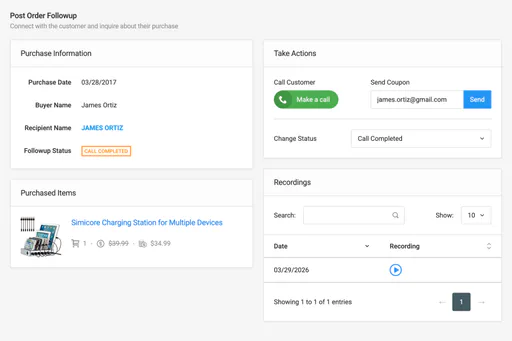
By 2020, the platform matured and was rebranded as SellerCrew. Feature scope included daily-priority dashboarding, post-order follow-up queues, Twilio browser calling with recordings, coupon inventory and send workflows, outreach funnel analytics, product and market research views, return/refund signal capture, auto-email operations, and year-end reconciliation reporting.
Across all phases, the main throughline was operational leverage: reduce manual coordination, make team activity auditable, and convert fragmented seller workflows into repeatable systems. SellerCrew supported the same marketplace operations as Simicore, with dependable workflows for follow-up, reconciliation, and daily execution.
Impacts
- Consolidated post-order calling, status updates, coupon actions, and outreach tracking into one workflow for remote VA teams, reducing handoff friction and spreadsheet dependency.
- Standardized follow-up execution with explicit call states and recording-backed QA, making coaching and accountability auditable at the order level.
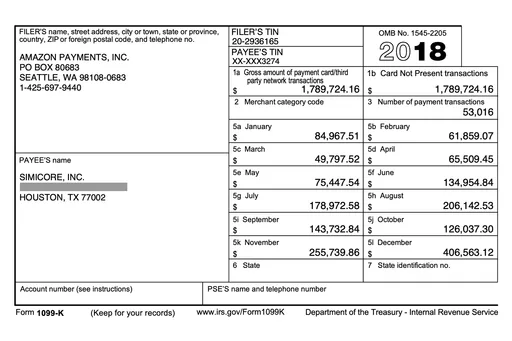
- Cut year-end accounting reconciliation from months of manual spreadsheet labor to under a minute, with auditable reports for sales, refunds, and expenses.
- Evolved the product from internal operations tooling into a subscription SaaS platform with account lifecycle, billing, and Amazon account sync support.
Challenges & Solutions
Challenges
- Post-order operations were fragmented across calling, coupon tracking, and spreadsheets, which slowed teams and created handoff errors.
- Early architecture needed to support fast workflow iteration, then later support broader SaaS product requirements.
- Outreach quality and agent performance were difficult to audit consistently across distributed assistants.
- A growing product surface required a more scalable deployment and operations model than the original hosted setup.
Solutions
- Built a single operational flow from follow-up queue to call completion to coupon action, with shared status definitions and centralized records.
- Evolved from AngularJS plus PHP API services toward a unified Laravel-centered platform, then modernized the frontend in the SellerCrew phase.
- Added call recording, playback, and workflow state tracking so QA, coaching, and accountability were built into day-to-day operations.
- Moved from Forge and DigitalOcean-style hosting toward AWS-oriented, queue-backed SaaS operations with Laravel Vapor-era deployment patterns.